
Amazon Glow Design Operations

As a Senior UX Program Manager, I led design operations for Amazon Glow, an interactive device that connected kids to their remote loved ones. We created tools and services that enabled designers and developers to create higher-quality activities.

Children could interact with a variety of activities on the Amazon Glow, either by themselves, with a sibling on the same device or with a remote caregiver via an app. These activities were created by internal design and development teams and external vendors, leveraging original artwork and 3P content from brands like Disney, Mattel and Sesame Street.
OPPORTUNITY
Amazon Glow targeted launching with over 100 activities available on-device; these activities were being created by internal visual, motion and game design teams and eight external vendors. I created a program to build and manage the tools and services these teams needed to build activities efficiently and consistently.
I prioritized the following to support a successful launch:
1. Design operations charter
Define team charter and roles & responsibilities within larger UX organization
2. Asset library enhancements
Improve the asset library experience and quality of content
3. Component library
Identify and prioritize highest impact components for designers and developers to leverage
4. Newsletter
Keep internal and external teams up-to-date on recent releases
DESIGN OPERATIONS CHARTER

Establishing a charter helped the Amazon Glow organization understand our remit and the value we would provide, as well as serving as a rallying point as a new team.

Ownership between designers on the UX and Design operations teams was complicated as there was overlap between horizontal UI/UX (ex: Global Navigation) and vertical experiences (ex: Barbie Go Fish). I proposed this model with UX leadership to clearly define areas of ownership, and after gaining alignment I shared with the larger Amazon Glow organization for visibility.
ASSET LIBRARY ENHANCEMENTS

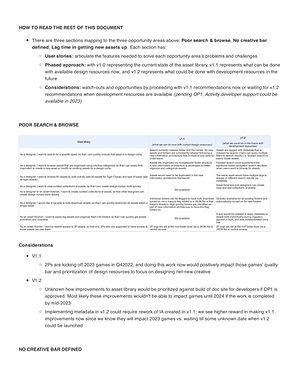

The asset library was an important tool for designers and developers to leverage when creating activities; being able to reference and reuse assets sped up production and ensured activities were consistent. Prior to the formation of the design operations team, the asset library had been haphazardly maintained between multiple teams and had a range of UX and asset quality issues including navigation challenges, assets of poor creative quality, and delays in getting high-priority assets uploaded. To address this, I developed a proposal with a phased approach, along with a resourcing plan and timeline for the design team to make immediate improvements. This plan was approved by design leadership and implemented.
COMPONENT LIBRARY

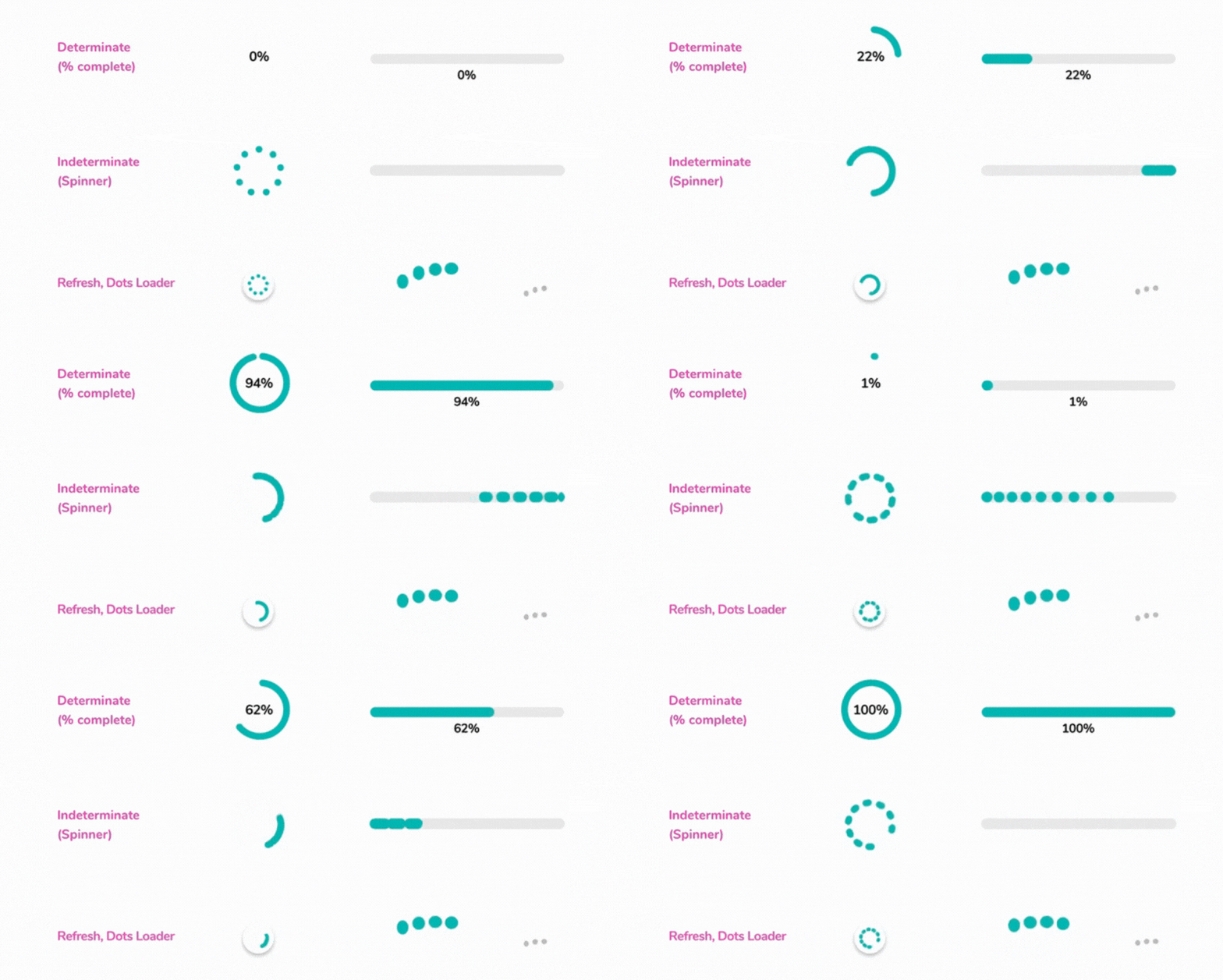
Once a team charter and roles and responsibilities were established and work was in-progress to clean-up the asset library, we turned next to the component library (a component library is a collection of built UI components and interaction patterns intended to maintain design consistency and reduce engineering cost.) We took a phased approach, focusing on UI components built in Figma and Illustrator, with coded components planned post-launch when development resources would become available.


The lead design manager and I led an effort to audit existing componentry, survey designers and developers to understand their needs, and score components based on business impact and effort. I created a project plan based on a two-week sprint cadence and wrote this document outlining the approach, findings and recommendations, which was reviewed and approved with design, product and tech leadership.
NEWSLETTER


I created a newsletter series to introduce the design operations team to the larger Amazon Glow organization, and provide an ongoing channel of communication to share out what had been recently released, feature articles from the design guidelines, and share results from user testing. I gathered content ideas from design team members, managed the content production process, reviewed drafts with leadership and developed and QA'd the emails as we didn't have email developers available. A small victory that I celebrate was learning how to code emails to be dark mode compliant, since ~40% of users view emails in dark mode.
RESULTS
-
Activities that leveraged design operations tools and resources had more consistent interaction patterns and improved visual and motion design quality, with 30% less QA tickets created for incorrect UI elements
-
Development partners were able to complete one additional game a month with time savings from UI kit and component library
-
Monthly UX newsletter were highly engaged with, with a ~35% open rate. I wrote guidelines and created templates for other teams to leverage to create their own newsletter programs based on its success